Living Stones and Holy Priests | Ecclesiology 2 | Ephesians 2:19-22 | 1 Peter 2:1-12

Continuing our First Sunday series on the study of the Church (Ecclesiology). In this sermon, Pastor Samms focuses on the assembly of believers as the temple of God and a royal priesthood. This metaphor for the church is used in both Ephesians 2:19-22 and 1 Peter 2:1-12 as the church is described as a collective group of stones that comes together to form the Temple of the Holy Spirit. The church must gather to fulfill this critical role (Hebrews 10:23-25). Last time we talked about the church’s role to put the truth of the gospel on display (1 Timothy 3:14-16. This week we talk more about the role of Christians as a “royal priesthood” that serves one another for the gospel.
Pillar and Ground of Truth | Ecclesiology 1

The evangelical church in America is suffering from a lack of doctrine, a lack of discipleship, and now a lack of attendance. The less faithful the Church becomes, the more troubled the society grows. One of the problems at hand is the lack of understanding of the Church. People don’t seem to know what the Church is or what it is made to do. Even prominent leaders such as Andy Stanley fail to recognize the essential nature of the church, assuming live streams are enough to keep people connected. But, the commands of God for the church go deep and wide. We are called to display the truth of the Gospel, to gather together, and to partake in physical signs connected to spiritual realities. In this series, Pastor Daniel Samms takes us through what the Church is, what it does, and why it is essential. This sermon focuses on the Church’s role as the displayer of Truth (1 Timothy 3). Future sermons will address the essential job of Christians to assemble as a Church, the role of serving and giving, the nature of ordinances (baptism and communion), and more.

God's Word: Canonicity, Clarity, and Life

It is common for church people to go around saying “God Told Me” without clearly understanding the implications of such a phrase. The language of “Thus saith the Lord” or “The Word of the Lord” bears the weight of biblical canon. In this sermon, Pastor Daniel Samms addresses two related topics: First, he teaches on the nature of Scripture and how we got the Bible, building our confidence in the authority and clarity of the Bible. Additionally, we discuss the role of the Holy Spirit to convict, direct, and otherwise work in a time when the biblical canon is closed. We answer questions such as “How can I know that the Bible is God’s Word"?” and “How can I know that we aren’t missing books of the Bible?” Additionally, we will address the question: “How do I know if God is directing/leading me?”

Biblical Civics: God's Law for the Nations

There is a common misconception that Biblical commands in the Old Testament were entirely limited to the nation of Israel, but the truth is that in both the Old and New Testaments, both Jews and Gentiles were held to God’s moral and civil laws. As Paul says in 1 Timothy 1:8-11, the law is useful if one uses is usefully.

Christians have been far too timid about bringing biblical commands into the civil arena. God designed governments to be ruled by laws (His laws), not by the whims of the populace or the pride of tyrants. The founding fathers of the United States understood the role of God’s Law as the foundation for a just society. This is why they cited Deuteronomy more than any other book and why they regularly prayed in the meetings.

This sermon addresses the issue of the lawful use of God’s law in the civil realm.

"Everyone Did What Was Right In Their Own Eyes" | Introduction to the book of Judges | Judges 1-2

The book of Judges traces the history of God’s people between Joshua’s death and the ministry of Samuel. It is. an account of Israel’s repeated disobedience, suffering, repentance, and restoration as Israel shows itself in need of a King. As we will see in 1 Samuel, not just any king will do. Ultimately, the account of Judges points to the need for the King of Kings. Join us in this study of Judges 1-2 that addresses not only the nation of Israel in the bronze era but also has implications for how we are to live in our current culture which has adopted a paganism akin to that of the Canaanites.

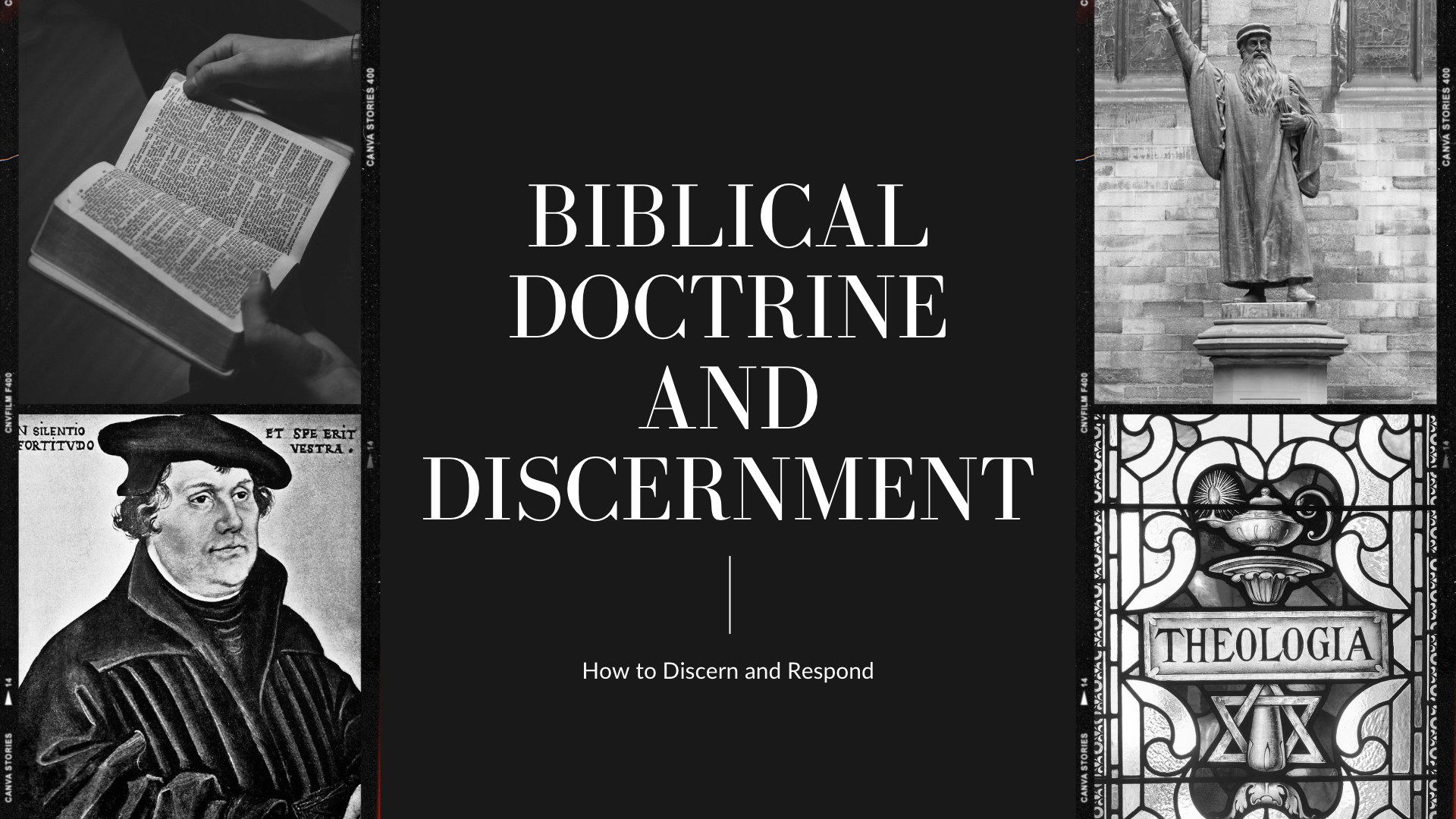
Biblical Doctrine and Discernment | 1 Timothy 4:16

There is a lack of exegetical teaching in many “evangelical” churches that leaves Christians ill-prepared to discern truth from error. Further, there is a lack of understanding related to the value of theology and Church history. Faithful Christians have been responding to error for millennia, and their shoulders are worth standing on insomuch as they stand on the Word of God. In this sermon, we outline biblical parameters related to the essentials of the faith and discerning truth from error. Additionally, we take a brief look at creeds, confessions, and statements of faith as they pertain to Christian doctrine.

Teach Them Diligently | Deuteronomy 6:1-25

God commands His people to teach their children the things of God. Deuteronomy 6 outlines the essential teaching about God and His work, the things we are to believe and teach to our children. With it comes a warning to avoid the gods of the age that tempt us to abandon the Truth. This sermon reminds us of God’s commands to teach the Truth diligently to our children and provides a few practical tools for doing that very thing.

Kill Sin | Romans 6

In times like these, it is easy for the relatively moral to point to the egregious sins of our time while ignoring the sins which function as the root system for the overt decay of the age. Children conceived in godly marriages with providing and protecting fathers don’t get aborted. Sexual abuse does not occur without being preceded by lust. Tyranny cannot thrive without lies and theft. The root sins are the support system for the evil that must be purged. This sermon on Romans 6:1-23 and 8:12-17 is about killing sin in our own hearts to choke it out in society. As John Owens says, “Be killing sin or sin will be killing you.”

Resurrection Sunday 2023 | He Is Risen | 1 Corinthians 15

Jesus rose from the dead. It is the historical reality that serves as the cornerstone of the Christian faith. Despite what theological liberals and progressives claim, you cannot be a Christian and deny the bodily resurrection of Christ. Fortunately, there is profound evidence for the resurrection. This Easter Sunday, we discuss biblical and historical evidence for the resurrection, and we remember the joyful hope that we have since Jesus died to pay our sin debt and rose from the dead to give us new life. Pastor Daniel Samms teaches through 1 Corinthians and answers some recent accusations about the “pagan origins” of Easter. (Hint: there are no pagan origins of Easter).

Acts 15 | Gentiles, Jews, and the Law | Parting Ways Without Sinning

Acts 15 provides two important accounts: One is the first church council (the Council of Jerusalem) at which the apostles and elders discuss whether or not gentiles need to become Jews and follow the law to be saved. The decision and the reasoning are foundational for the future of the faith. Also, it serves as a template for future councils. Praise God that we are saved by grace through faith, and that this salvation is confirmed by the Holy Spirit! The second account addresses how Paul and Barnabas part ways over a practical ministry disagreement. This is important as a model for faithful disagreement and even parting ways without sinning.

Biblical Patriarchy

Scripture consistently teaches that men are to lead their homes and that godly men who lead their homes well are the ones qualified to lead in the civil arena as magistrates and in the church as elders/pastors. Ephesians 5, 1 Cor. 11, 1 Peter 3, and many other passages give us insight on this biblical patriarchy. Critical to understanding this is that these men are to oversee their homes in an understanding way, loving their wives and children. Proverbs 31 describes a woman who thrives under her husband's authority. She feeds the poor, invests in real estate, speaks wisdom, and is honored by her husband and children. Of course, this requires manly men who lead well, love God, and make disciples in their homes.

Born Guilty: Original Sin | Romans 5

According to the StateofTheology.org survey from 2022, 65% of “evangelicals” do not believe that people are born guilty in the sight of God. This is a problem given that 1 Corinthians 15:22 says, “For as in Adam all die, so also in Christ shall all be made alive.” The fact that the beliefs of “evangelicals” on this and many other topics seem to correlate with the culture as a whole reveals that most are getting their theology from the culture rather than from the Word of God. In this sermon, Pastor Dan teaches from Scripture on Original Sin, equipping the saints and emphasizing that just as in Adam, all die, so all who are in Christ are made alive (Romans 5:12-21). The gospel of Jesus’ atoning death and resurrection is good news indeed!

Acts 8 | The Gospel Goes to Africa

Acts 8 begins with Saul persecuting the church in Jerusalem, leading to the gospel spreading to Judea and Samaria in partial fulfillment of Acts 1:8. But, the focus soon turns to Philip as he explains the gospel to a God-fearing Ethiopian on his way to Africa. Praise God!

The Law | Its Role and Purpose | Acts 15 | Galatians 1, 2, and 3

Recently, old errors related to the misuse of the Mosaic Law have surfaced with new names. Parts of the Hebrew Roots movement have drifted into Judaizing error, seining to earn merit or favor from God through strict adherence to Mosaic Law and tradition. Some (not all) have even denied the gospel in the process. Additionally, many “evangelicals” have adopted antinomian error, denying the unchanging moral law. What purpose does the Law of God serve? How are Christians to see the Law now? We address these and other questions related to the Law in this sermon, focusing on Acts 15 and Galatians 1, 2, and 3.

Acts 5 | Holy Spirit Unity and Civil Disobedience for the Gospel

The book of Acts is about the proclamation of the Gospel, and the Holy Spirit is the Star. The recurring pattern of this book is that the Holy Spirit does something, and the gospel is preached. Chapter five is no exception. In the first section, we see the account of Ananias and Sapphire lying about their donation to the Church. Pastor Dan clarifies some misconceptions about why these two faced such a severe punishment. Along the way, we learn that the voluntary donation of resources in the church, which provides for the poor, is nothing like Marxism/Communism. The last part of the chapter addresses the apostles’ civil disobedience against the apostate religious leaders of Jerusalem and the magisterial authority of the Roman government, which they welded.

When should we disobey governing authorities? When should we defy religious authorities? Acts 5 provides a clear example of when to obey God rather than men. Praise God that the gospel remains as its enemies are converted, destroyed, or forgotten.

Truly God and Truly Man | John 1 | 2 John | Deity of Chris | Christology

The doctrine of the deity and humanity of Christ (hypostatic union) is critical to Christianity. In many ways, it is the "lynchpin" doctrine of our faith. Tragically, the 2022 State of Theology survey reveals that 43% of "evangelicals" deny that Jesus is God! In this sermon, Pastor Daniel Samms provides a biblical apologetic for the deity and humanity of Christ, citing several passages of Scripture and the creeds of Nice and Chalcedon. John 1 and 2 John are our primary passages.

Obedience to Christ Against Tyranny

Tyranny is when an authority or group of authorities steps outside their God-ordained roles either through overstep or abdication of responsibilities. 1 Samuel 8 warns against tyranny as the prophet reminds God's people that the tyrant will seek to place himself in the role of God, taking a tenth, conscripting for war, and taking children for his purposes. The ultimate solution is to obey God and defy tyrants. The choice is between Christ and chaos. Deuteronomy 6:4-9, Mark 12:28ff, and Matthew 28:18-20 provide clear directions on how to battle tyranny through faithful living. However, there are a few other key passages such as Exodus 1, Daniel 1,3, and 6, Acts 5:29, and Judges 3 and 4 that give models for how to respond to tyranny.

Romans 6 | Recon Yourselves Dead to Sin

Romans 6 addresses the reality that we have died to sin now that we are baptized into Christ. This means we should live as slaves to righteousness as we have died to the old master, sin. This is a critical passage as it relates to sanctification.